Wednesday, June 12, 2013

Life on the Land in June

It's nearly the shortest day, and I know that the worst of winter comes in July, but still, days like today are miraculous. It's great to be reminded of how lucky I am to live in such a lovely place.

 When my friend Susan and her family moved back to the States way back at the beginning of the century, she dug up her wedding anniversary rose and brought it to live with us. It hasn't grown well in our winds, but determinedly keeps on growing - and today I found one bloom, near the base of the plant.
 These bulbs came from my friend Margaret,and what a sweet reminder that spring will come round in its time.
 
 I first got pineapple sage from my mother, and have had it every since. She died nearly 25 years ago, so I guess I've had this lovely winter flowering herb for about 35 years. Can you see the bee? They can't get down into the flowers, so they nip a hole in the base, and steal the nectar.
 Gorse. A weed. Yet it has a delicate and delicious fragrance - and it is buzzing with bees at this time of the year - a staple of their winter diet.
 The other winter staple is tagasaste.
 You can see some of the bees with the pollen they have gathered in pollen sacks on their legs.
 

And the bumblebees make sure they get more than their fair share.

The one last ancient chook left. She's blind in one eye, and the other eye isn't so great either, but she can still find her way to the water bowl and the Grandpa's Feeder, and although she quite often falls asleep standing up, she still enjoys a bit of sun and a dust bath. She's served her time as a great layer, so I don't begrudge the old lady her retirement.

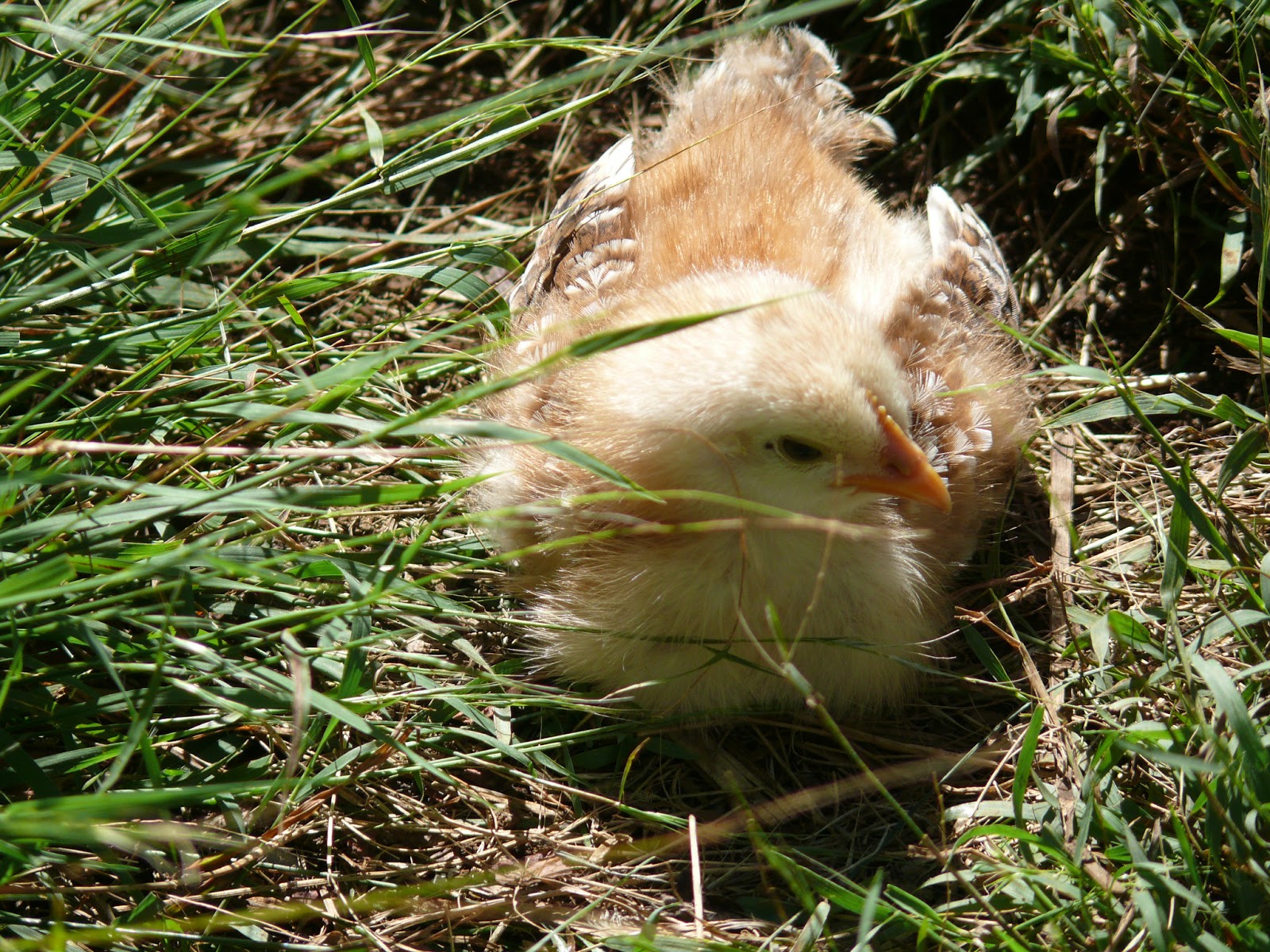
 It's pretty hard to tell the difference between the new chooks (hatched at the end of January) and the older girls. Of the six who have almost made it to adulthood, I still don't know how many are roosters - I think half, but still can't be sure.

 These are two of the young ones.
 The nashi leaves are still lying on the grass, and there's even a few clinging to the tree.
 
 Will our sugar cane make it through the winter? I've been out covering it with frost cloth, and we have planted lots of tagasaste around (see the electric fence standards used as markers.)
 The little grapefruit tree is promising a good batch of marmalade, as long as the pesky possums don't get to them - hence the trap.
 The lemons have suddenly started ripening up - we have gone from almost enough to too many in just a week.
 And way, way too many limes.
 The garlic, three types, is planted.
 Can't wait for spring peas - I've never grown them at this time of the year before, but they are looking good.
Assorted greens, which may or may not come to anything.
The broad beans are growing well and some have started to flower already - that garden will be alive with bumblebees shortly.
 We have chard,
 and carrots,
 and leeks,
 and parsley,
 and excessive amounts of New Zealand spinach,
 and rhubarb
 and Cape Gooseberries
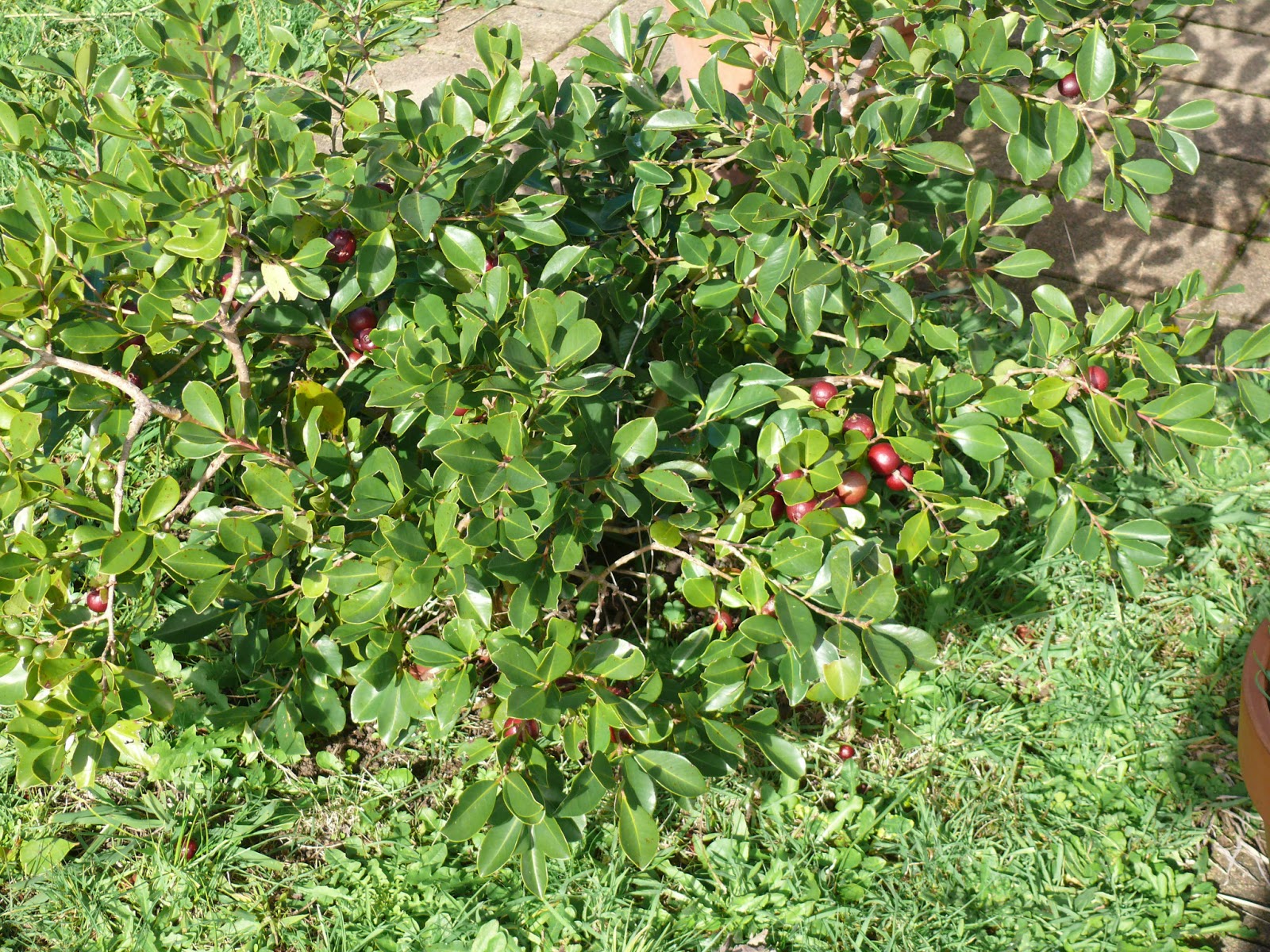
 and Chilean guava. ( As well as the harvested onions, pumpkins and potatoes.)
 
 I have relocated some of the strawberry plants (and re-homed about a hundred and fifty so far.)
 
 But it's a glorious day, perfect for sitting in the sun.
 Morning tea: lemon and honey drink, gatherings from the garden, and a handful of almonds (not home-grown, but home soaked and dried.)

Life is good.

Mushrooming Intentions

Last weekend I went on a Tree Crops association visit to a local property where Lennart Prinz is growing mushrooms. You can buy mushrooms from Lennart at the Hamilton Framers' Market on Sunday mornings. I discovered that many mushrooms take a lot more energy, equipment and knowledge to grow than I have or want.


However, I am going to have a go at growing shiitake mushrooms as they seem much less labour intensive, at least once you get started.

All I have to do is chop down a couple of spare chestnut trees, cut into logs,

 
 drill holes all over the place, stuff spawn in the holes, seal the holes with wax
  - and wait.


 Better go get the chainsaw out.


Sunday, April 21, 2013

Dried Apples, Jelly and Vinegar

Last year was a nashi year, but this year I ate only two. Instead, this year has been an apple year. I dried four large Agee jars full of cooking apples, then quite a lot of eating apples: it's hard to say how many because we keep eating them! I am so glad to have invested in a bigger slicing blade for my Magimix food processor, and in my wonderful Excalibur dehydrator.

 As you can see, one bag is almost empty, even though we haven't finished eating the fresh apples yet.

After I mentioned on Facebook that I was dehydrating apples, one of my FB friends, Mac's cousin Emma, suggested that I turn the peelings and cores into vinegar.
 Why not? Here's the last lot soaking in a bucket with water and a splash of cider vinegar.
 Something's definitely happening - whether it ends up edible, we will discover in time.
Meanwhile, the feijoas started to fall at the rate of a bucketful a day. After getting a new stockpot at Farmers with a 60% discount, I started out with the promise of not having to spend hours afterwards scrubbing chacoal off the bottom as I had to do every time when using my late mother-in-law's preserving pan. I boiled up the feijoas,
then put them to strain through cloth bags, into the very useful buckets I got from a fellow beekeeper. They originally held the rather disgusting filling that you get in slices from bakeries.
 They come with lids, which keep the wretched plague of small flies that have invaded us, out of the jelly bags.
 After boiling up the liquid with fair trade sugar from Trade Aid, I end up with beautiful jelly, which will be distributed to family. Thanks to the Edmonds Cookery Book.

Meanwhile, outside the rain was falling and the garden was gasping with relief and enthusiasm after the weeks of dry weather.
The leeks have grown a few inches.
The pumpkin vines, which had started to die off, have sprouted new shoots and flowers, in a burst of unwarranted optimism.
The broad beans and peas have sprouted, and the brassica seedlings are standing up again, instead of lying limply on the dry ground.
The rhubarb is looking healthy again, not only from the rain, but also from being released from underneath an over-excited pumpkin vine, and fed a couple of buckets full of worm wee.
And the Meyer lemon tree - there's really nothing more joyful than the globes of sunshine adorning a lemon tree - hmmm - there might just be enough eggs to make a couple more jars of lemon honey tomorrow.


Sunday, April 14, 2013

April in the Garden

For a long time I have loved the idea of growing as much of our food as possible. And I have loved picking it, and eating it and preserving it.

 Red onions - the seedlings were from someone Mac works with - there's a group of them who share surplus seedlings and produce.
 
 I uncovered the rhubarb from its covering of pumpkin leaves but.....
 
...... under the rhubarb leaves were two large pumpkins!
 I cut the mint and lemon balm back because they had gotten rust, and trimmed the thyme - what a sweet job - the scent was divine!
 Best capsicum season I've ever had.
 The pumpkins are everywhere this year; some I planted, some just appeared from the compost.
 A little silverbeet, leeks, and NZ spinach
 A few beetroot, carrots, capsicum, parsley.
 The cucumbers are still producing, and there's a whole bunch more pumpkins in there too. The bare patches have all been sown with a cover crop, and are just waiting for the rain due this week.
The next set of beds: closest - broad beans; next - celery, brassica, a couple of lettuce, peas; and furtherest - a few last tomatoes, capsicum and courgettes; and dried up sweetcorn plants awaiting removal.

However, the sad truth was, I didn't really like the actual gardening part of the process!

Today I spent all day in the garden, sometimes listening to Chris Laidlaw on National Radio (great item on bees), sometimes just working in the quiet. Usually I get bored and fed up after an hour or two, but today, for the first time, I just enjoyed gardening, kneeling on the grass, hands in the soil, clearing weeds, uncovering plants and produce, watching the insects and bird, chatting to the dog, enjoying the sun on my back, and the wonderful feeling of working hard and successfully.

My elbows, wrists, neck and shoulders are aching, despite a soak in the bath and rubbing in pain relieving cream. But I feel great. I think this will be my first winter garden that makes it through the dark days, because I can't bear the thought of not gardening for months. I'm so lucky to live somewhere that I can garden all year round!

Monday, March 25, 2013

The Perfect Weekend

So often we seem to be looking forward to the perfect man / holiday / job / dress / life / whatever, but are, of course, doomed to failure in our search. Or are we? I think what's needed is recognition that 'perfection' comes in many forms.

Recently I have had a perfect weekend. Twice.

The weekend before last I went to WOMAD, in New Plymouth. I went with Mac. We camped with one of our sons, Simon, and his partner Rebecca, and a whole bunch of their friends, and their friends' friends. We laughed and danced and drank and listened to good music and danced some more and got wet when the rain came to break the drought and it was a perfect weekend. I would have loved it if my other sons and their partners and some of my other friends had been there,but it was what it was and it was perfect.

Last weekend, I went to the second NZ Natural Beekeeping Conference. I learned heaps, had a vegetarian lunch provided, met some interesting and pleasant people and got stung on the head when a woman tried to beat a bee out of my hair instead of just picking it out gently. I got to know some fellow Whaingaroa Bee Club members better, and confirmed that I like them a lot. When I got home, somewhat sore of head and tired, another of our sons, Steven, and his wife, Heidi, came out to stay the night, and Steve cooked us all a very yummy dinner.

On Sunday I did lots of food preservation: I froze Roma tomatoes; I peeled, sliced and dried apples; I collected and froze chestnuts; and I collected Cape Gooseberries added them to some I had in the freezer and made my favourite jam. Mac had cooked homegrown eggs and tomatoes for lunch, so for dinner we just had dessert! Heidi cooked buckwheat pancakes, which we ate with apple I stewed a couple of days earlier, apple butter I made a couple of weeks ago, and icecream.

Another perfect weekend.

This weekend is Easter and I'm looking forward to Mac being home for four days instead of the usual two. There's heaps of work needing doing, A friend is planning to come out for a night or two, maybe there'll be other visitors, maybe not. It may be sunny, though I'm hoping for one rainy day. If we work really hard, a trip for a soak in the Waingaro hot pools may be in order.

With the nights getting cooler, and the days shorter, something inside me is starting to feel sad and black, and I am acutely aware that winter is on its way. I've found my 'happy light in the cupboard, and will start to use it for half an hour morning and night. But most of all, I will try and focus on all the good stuff in my life rather than the bad stuff, which isn't really so bad, and to not think about the disappointments and the what-if's that lurk endlessly in the back of my silly mind waiting to take me unawares. If I am mindful and aware then the monsters won't be able to get me, will they?

I'm planning on Easter being another perfect weekend.

Tuesday, March 5, 2013

February Reading

My intention was to keep track of most of the books I read - or at least those that aren't 'junk food' but the death of my friend Marcia at the end of November sent me into a reflective state such that I had to put all my energy into not falling into depression. I managed that, but many things suffered, including both my reading and writing. However, three books really caught my attention. Both authors are just a few years younger than me (and Marcia), so fitted well with my time of reflection - my gosh, I had it easy! I have never liked reading biographies or autobiographies, but I think I've been converted after reading these, and previously, Roger McGough's Said and Done.

Oranges Are Not The Only Fruit 1985
Why Be Happy When You Could Be Normal? 2011
by Jeanette Winterson

I read 'Oranges' first simply because it was written first, and think that was the best way to do it, even though, as it is written in the form of a novel, I found my constant wondering about which parts were 'true' and which parts were fiction somewhat distracting. Horrifyingly, it seems that not only was most of it true, it was also very understated. Winterson has said,
 "I suppose the saddest thing for me, thinking about the cover version that is Oranges, is that I wrote a story I could live with. The other one was too painful. I could not survive it."
Jeanette was born in 1959 in Manchester and was adopted out six months later. Mrs Winterson, as she calls her mother throughout, wanted a baby to raise in her Elim Pentecostal Church to become a missionary. She was beaten, she was often hungry, she was often left all night outside on the doorstep. Her mother was both excessively religious and very depressed. She was not loved for herself, but only for her fate - to become a missionary.

Jeanette started her writing career at the age of six - writing sermons! She was involved all the time in the church activities and evangelising, including the Gospel Tent - a once a year mission to other towns, preaching in the church's Gospel Tent.

Books were not allowed in the house except for the Bible and a couple of others.

In an interview from the Guardian, Jeanette says of Mrs Winterson:

"It was never going to work between us. I don't know what fate put me with her, or her with me, but at least I was able to use all that and make something of it. Whereas for her it was just purgatory. She was a very unhappy woman. And I was a happy child. In a way, the battle between us was the battle between happiness and unhappiness."

There is little overt bitterness, though my imagination filled that in. The books are not relentless misery; there are amusing anecdotes in both books.For example, Mrs Winterson says the lesbian sweet-shop owners deal in "unnatural passions", and the young Jeanette thinks it means they put chemicals in their sweets .  She tells of how Mrs Winterson "was one of the first women to have a heated corset. Unfortunately, when it overheated it beeped to warn the user. As the corset was by definition underneath her petticoat dress, apron and coat, there was little she could do to cool down except take off her coat and stand in the yard."

She left home at 16 after becoming openly lesbian, and went on to work her way through a degree in English, and become a novelist. Later in life, after discovering that her birth mother had not died, as she had been told, she searched for, and found, her birth mother, and found she got on well with her, and keeps in touch.
"Mrs Winterson had always insisted that my biological mother was dead. She also told me that my mother had been a drunk, a drug addict, a mental patient, and a woman who had exploded. I didn’t necessarily believe any of this, but it didn’t make me eager to start looking for her either.

"Then, in 2007, I found some yellowing paperwork hidden in an old chest of Mrs W’s. The papers revealed another name for me – but one violently scribbled out. I was troubled enough and curious enough to risk going further."
 This woman has lived a highly controversial life, has suffered misery, abuse and depression, yet writes of a life filled with, well, LIFE! I found her inspiring, not because I want her life, or to do the things she has done, but simply inspiring in this wonderful determination to live and be exactly who she is.


The Glass Castle 2005
by Jeannette Walls

Born in 1960 in Phoenix, Arizona, this Jeannette lived a very different life from Jeanette Winterspoon. Her parents lived a nomadic, sometimes homeless, life. The book opens with the appalling story of her being burned as a three year old, while cooking hot dog. The book tells of a life of poverty, as her father was sacked from one job after another. Sometimes they slept in their car; other 'homes' were broken down shacks, an abandoned railway building - but always there were the plans for the Glass Castle that her father was designing and going to build one day. On a couple of occasions out of utter desperation, the mother worked as a teacher, but not for long: she was an artist, she claimed, and it was an offence to her Art to work as the teacher her mother had insisted she trained as. They had little food, and were expected, in the main, to feed them selves - hence the hot dog incident. In one home, the father found some timber and made bunk frames, hung ropes across, and then put cardboard over the ropes, making 'real' beds - they usually just slept in the cardboard boxes.

The neglect unfolds gently, however, which makes it even more horrific, because Walls writes from the perspective of the child at what ever age she is writing about. Hence the hot dog incident is less about the horrific burns she endured, and more about the indignation she felt at the hospital staff's criticism of her having been cooking her own food.

She writes about the joys of the life they led. One Christmas, with no money for presents, her father took the children outside and told them they could each chose a star to be their very own for always. Walls chose one but was told it wasn't a star, but a planet. Then her father said, 'but it's Christmas, if you want a planet, you can have a planet.'

As she gets older, she starts to recognise the inadequacy of her parents and their way of living. Eventually her older sister leaves for New York, to find a job and live a better life - and she makes it. Then Jeanette follows at 17, found a job to support herself through her final year of school. Next, they fetch their brother, 13, and take him to New York, and support him through the rest of his schooling. The youngest sister ran off to California and they don't have contact with her. The parents eventually moved to New York too, and lived as homeless street people. Her mother is still alive.

Jeannette graduated from Barnard College with honours, and became a journalist, gossip columnist and writer. She moves in the rich and famous circles, and constantly feared that people would find out about her homeless, dumpster-diving parents, who refused to be helped into a 'better' life by their children. But eventually she decided to come out about her life, wrote The Glass Castle, and appeared on Oprah just before the book came out.

I found both books fascinating, moving, tear-inducing, and inspiring. I was amazed at how different their childhood days were from those of mine, lived on New Zealand farms and small towns, without the neglect and abuse, and yet how easily I could relate to these women. That in itself is a sign of the quality of their writing.

Wednesday, February 27, 2013

Raising Chicks

When I first got chooks, I bought Brown Leghorns, because I liked the idea of old breeds, and I had always loved the roosters of this breed, which look like the roosters of farmyards in children's picture books. A couple of years later, when I wanted to extend my flock, I couldn't get any, and had given up on the idea of a rooster. Partly because of the noise, and partly because I thought the cats would eat the chicks produced. So I bought Red Shavers, the hybrids used in battery egg farms. They have proved to be wonderful layers, and pleasant natured in the main.

One of the characteristics of hybrids is that they hardly ever go clucky or broody. I've had one who has gone clucky several times over the last three years, but that was easily cured by putting her in a pet rat cage given to me by a friend. (Rat not included!) With lots of light and air, and nothing to make a next with, she quickly gave up on the idea of raising babies.

However, this January not one, but three hens decided their internal clocks were ticking and all went broody the same day - and I couldn't fit three of them in the cage! I bought a dozen eggs off Trademe and put four under each hen. Twenty-one days, the Lifestyle Block book How to Car for Your Poultry said. Would they be right? They weren't right about hybrids not going broody!

 Day 2 - 1 egg broken by a clumsy new mum.

Day 18 - 2 eggs broken by helpful children collecting the eggs for me. Sad, but I knew from the remains that something was happening inside the shells.

Day 21 - CHICKS!!! But one died, exhausted from its efforts getting out of its shell.

 What's that little bit of white on the right? Egg shell!
 Breaking out.
 Out!
 So much easier when they were in, though.

For the first few days after hatching, I kept the chicks and mums in an old chook hutch designed for 2-3 chooks, but soon the mums were fighting and so I decided that they would have to take their chances in the main chook run.

 The old 'hutch was so dilapidated, I had to encase it in bird netting to stop them getting out....
 
 .... and to stop Spike from getting in.
 So glad my new-borns weren't this active!
 The chook mommas would have preferred that too.
 Out in the big chook run.
We weren't sure what decapitated number 8, but a couple of weeks later there was much squawking from the chook run and when we got down to the run, we could see just 2 chicks, and found 3 broken eggs as well, rolled away from the nest some hens had made in the grass. We assumed ferret, stoat, weasel or rat, and set a trap. Later, when the chooks had settled down, we discovered that only one chick was missing.
 And there was dancing in the streets....


Turns out, it was an Australasian harrier (hawk), so I set to and made some extra 'canopy' to deter the harrier, and as far as I am aware, it's only been back once. Mac heard that there are people who will come out and trap them, and relocate them away from people. I hope he can track them down, because earlier, the same bird was stealing our duck eggs. They have gone off the lay now, which is, I assume, why it has moved its attention to the chook run. Enough, I say!
 There is quite a bit of cover in the run, from flax, fig, apple, pear and avocado trees, also a bare area.
 
 Looking like a hippy chicken run now!

The remaining 6 chicks are growing well - now I'm holding my breath to see if any are female, or if they will all turn out to be roosters. I hope not, although I think I might keep one rooster.

Tuesday, February 26, 2013

Love Is A Verb

Three months ago my friend Marcia died. We first met in 1972 working at the Post Office Savings Bank, both in our first 'proper' jobs. She, straight from school, me, taking a break from university to earn some money, so she was two years younger than me. She was a lively, vivacious young woman, and we had a lot of fun together, but then I went back to university and then off overseas for the great OE (overseas experience), while she married and had a baby. By the time we got back from overseas, she had been widowed, had a new man in her life, and we drifted apart due to the very different lives we were leading.

Then in July 2009 I went along to a Hamilton Organic Gardeners' meeting and there she was - talking about urban beekeeping! Shortly afterwards I signed up for the Fraser High School night class that Marcia was teaching, and each evening after class we talked and caught up on all those years, and found that we had so much more in common now. Our friendship started again, stronger and more interesting than before. For three years I enjoyed her company online, by phone and in person, mostly coffee and a walk at the Hamilton Gardens. Then she was gone again. I'm so glad I talked to her just a week before she died. I'm so glad I had those three years, getting to know her as an enthusiastic, intelligent, passionate, interesting, mature woman. She help me see life more positively than I am apt to do. She showed me how to enjoy life for the good in it. She showed me how to acknowledge the bad things that happen, but also how you can then step out of the shadow and focus on the good stuff.

I miss Marcia so much. I think of her most days. I have also been brought face to face with my own mortality. After so many years of depression, I have been basically free of it for a couple of years, and I want to live longer, to live and enjoy life. Marcia was enjoying her life: she died at a time of her life when she was following dreams, making plans and living hopefully. I want to live like that. I hope I get the chance to live like that for a lot longer. But I also want to die like that - in the midst of a life lived in joy, hope and dreams.

A few days ago, a man a couple of years older than me died after his car left the road - the scariest road I have ever driven. I didn't know him well. I knew his widow via the online homeschool community, and enjoyed her online friendship, but lost touch after the email lists we were on broke down. I visited them in 1999 along with Steven, Simon and Jeffrey, staying in one of their various tourist accommodations. They were lovely people. They have 10 children and some grandchildren. They loved each other in a way that shone brightly and obviously. Now he is dead.

So, after three months of pondering about my life and what will happen between now and when I die, Tim's death has brought me to pondering the awful possibility of Mac dying before me, and what that would be like.

I realise that life is all I have right now. The present is all we have: I have to live joyfully, and I have to do anything I can to make Mac's life more joyful too. I must not take life for granted. Nor can I take Mac's life for granted.

Partners, parents, children, friends - don't take any of them for granted. If you love them, show it. Talk to them. Spend time with them. Make sure they are part of your life. Don't put them off until you aren't so busy with other things.

Love is a verb: do it. Live is a verb: do it.